Recent & Upcoming Talks

2024

The Art of the Invite: Crafting Successful Invited Session Proposals

Invited sessions at conferences provide important opportunities for the exchange of ideas. But how do we get invited? And how can we do the inviting? In this panel, we will bring together experienced women in statistics from all career stages to share their tips on organizing invited sessions. Our panelists have planned and participated in numerous successful invited sessions at statistical conferences and have served on program committees to plan and select these sessions on a large scale. This panel is intended to demystify the invited session proposal process and to empower researchers to submit their ideas in the future.

October 8, 2024

11:00 AM – 12:00 PM

IDWSDS 2024


By Lucy D'Agostino McGowan, Ana Ortega-Villa, Suhwon Lee in Invited Panel

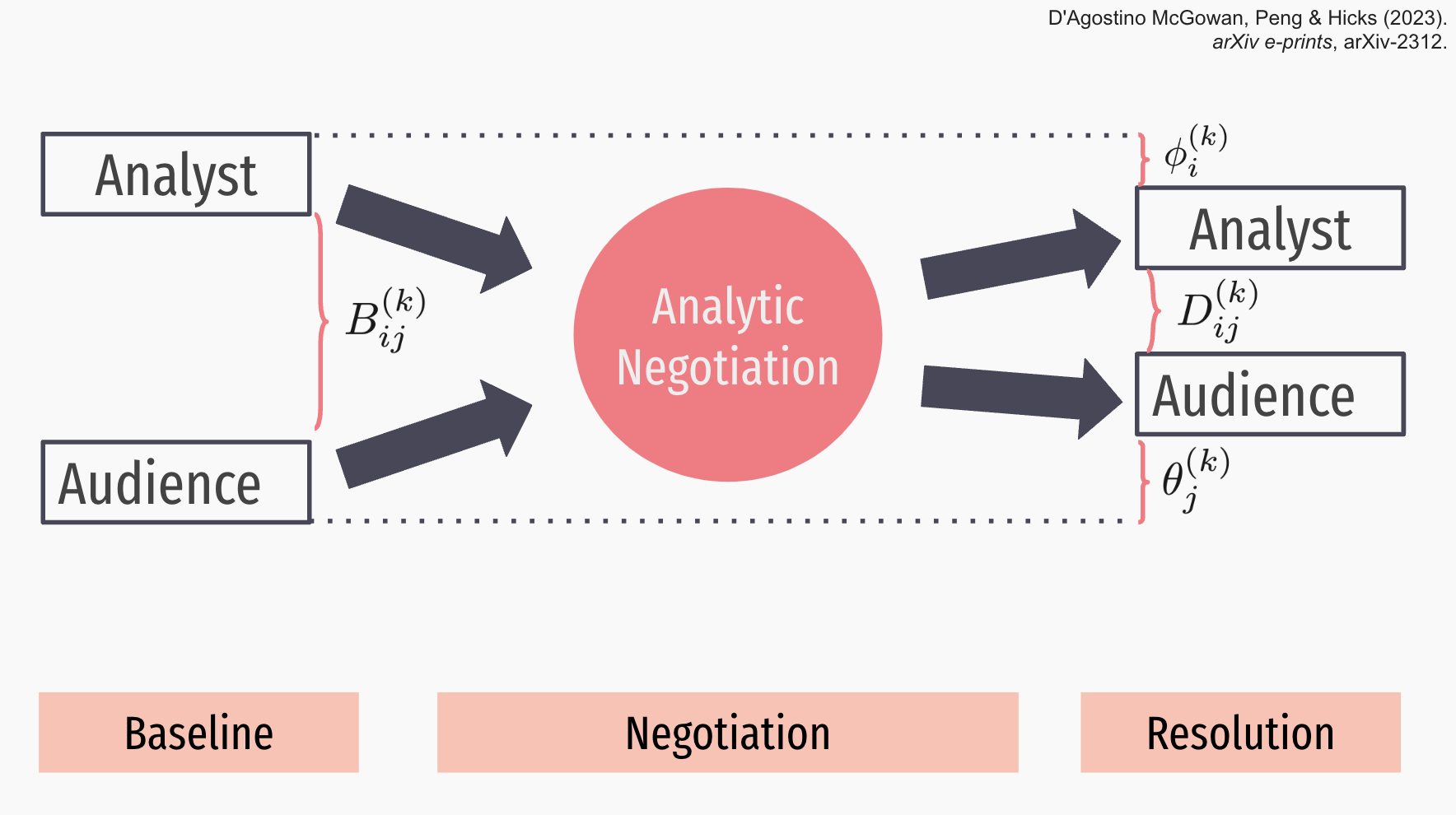
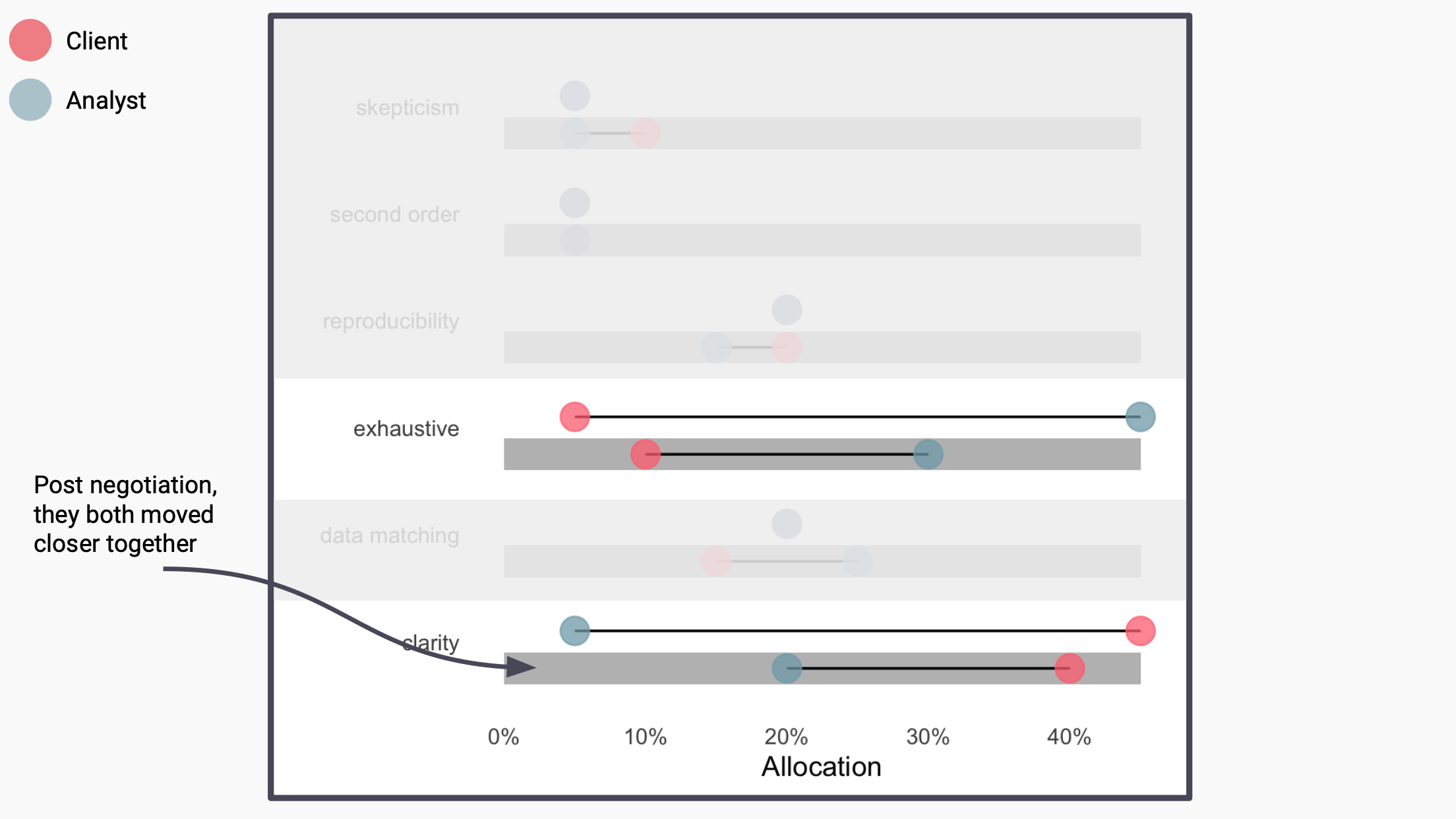
Evaluating the Alignment of a Data Analysis between Analyst and Audience

A challenge that all data analysts face is building a data analysis that is useful for a given audience. In this talk, we will begin by proposing a set of principles for describing data analyses. We will then introduce a concept that we call the alignment of a data analysis between the data analyst and audience. We define a successfully aligned data analysis as the matching of principles between the analyst and the audience for whom the analysis is developed. We will propose a statistical model and general framework for evaluating the alignment of a data analysis. This framework can be used as a guide for practicing data scientists and students in data science courses for how to build better data analyses.

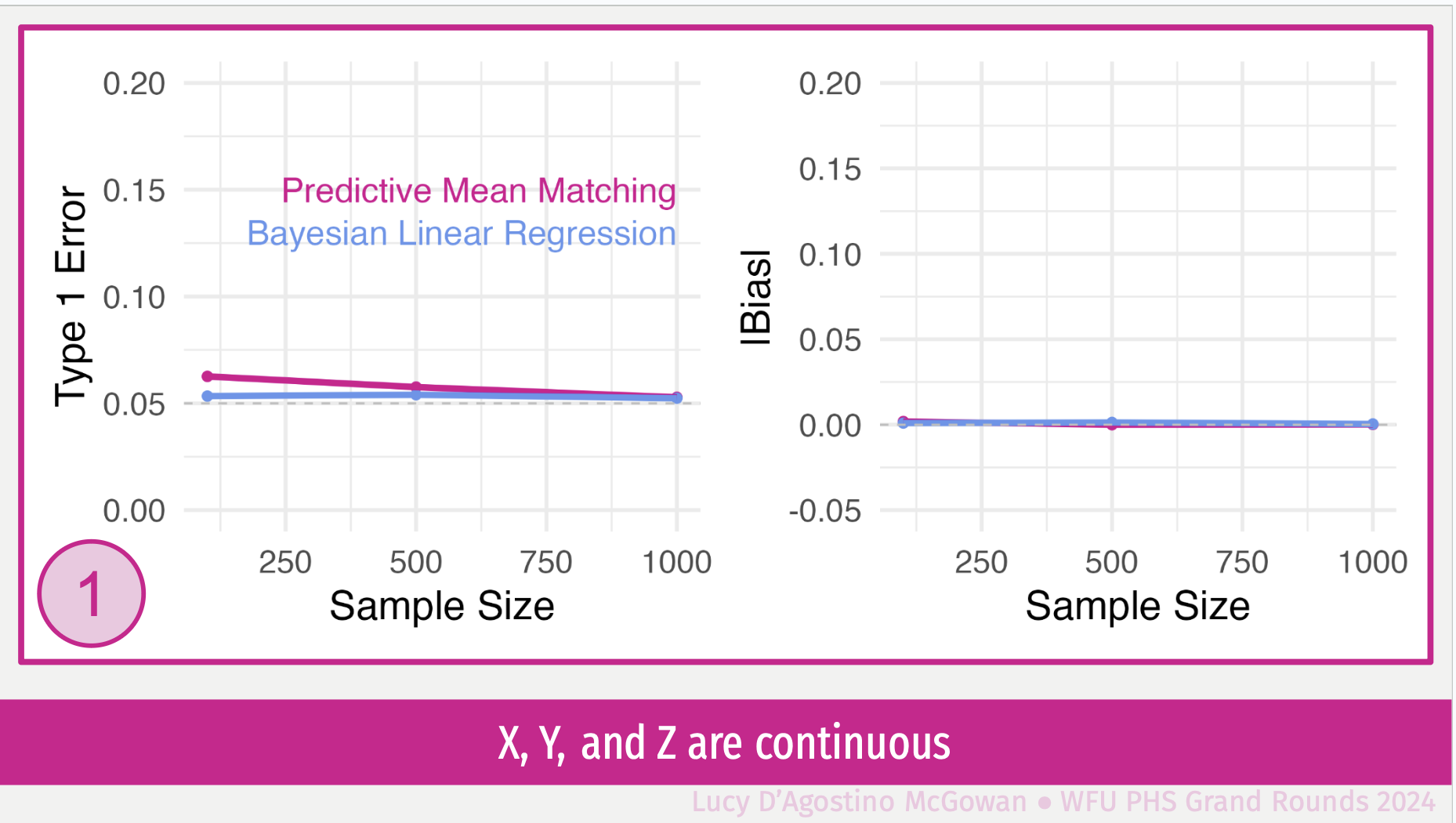
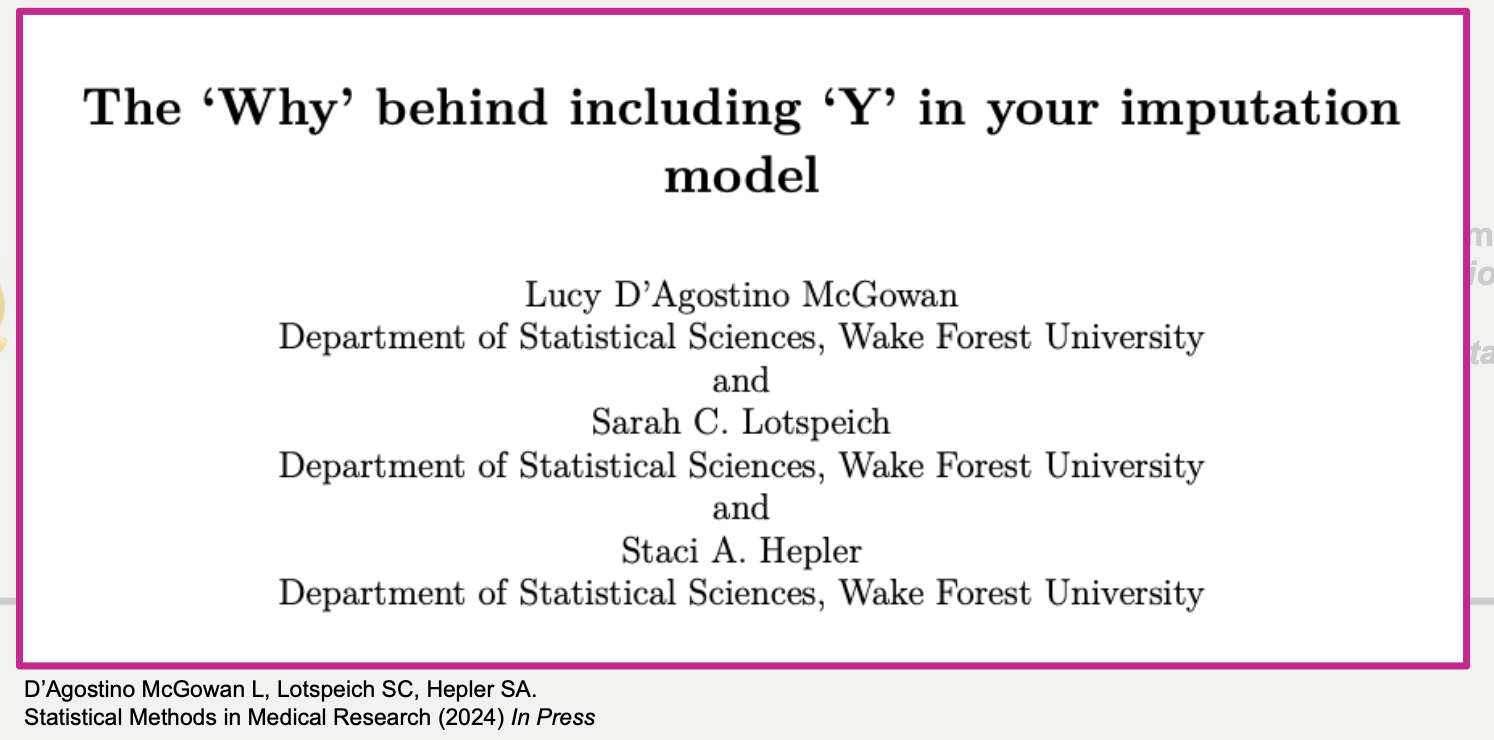
Why You Must Include the Outcome in Your Imputation Model (and Why It’s Not Double Dipping)

Handling missing data is a frequent challenge in analyses of health data, and imputation techniques are often employed to address this issue. This talk focuses on scenarios where a covariate with missing values is to be imputed and examines the prevailing recommendation to include the outcome variable in the imputation model. Specifically, we delve into stochastic imputation methods and their effects on accurately estimating the relationship between the imputed covariate and the outcome. Through mathematical proofs and a series of simulations, we demonstrate that incorporating the outcome variable in imputation models is essential for achieving unbiased results with stochastic imputation. Furthermore, we address the concern that this practice constitutes “double dipping” or data dredging. By providing both theoretical and empirical evidence, we show why including the outcome variable is a legitimate and necessary approach rather than a source of bias.

May 28, 2024

12:00 PM – 1:00 PM

Wake Forest University School of Medicine Division of Public Health Sciences Grand Rounds 2024


By Lucy D'Agostino McGowan in Invited Oral Presentation

slides

Causal Inference in R

In this workshop, we’ll teach the essential elements of answering causal questions in R through causal diagrams, and causal modeling techniques such as propensity scores and inverse probability weighting.

May 15, 2024

9:00 AM – 5:00 PM

New York R Conference 2024


By Lucy D'Agostino McGowan and Malcolm Barrett in Invited Workshop

details

When to Include the Outcome in Your Imputation Model: A Mathematical Demonstration and Practical Advice

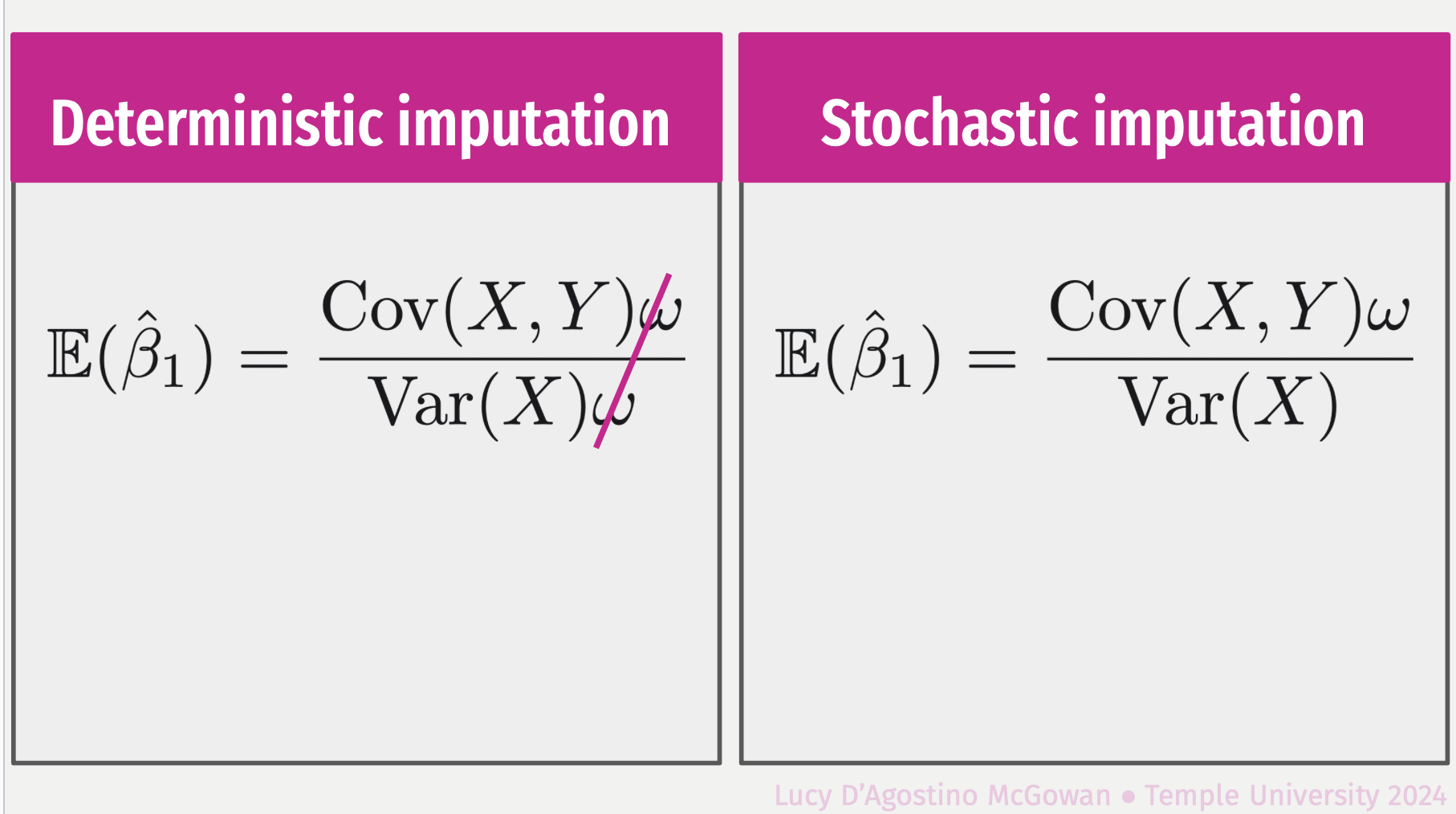
Missing data is a common challenge when analyzing epidemiological data, and imputation is often used to address this issue. This talk will investigate the scenario where a covariate used in an analysis has missingness and will be imputed. There are recommendations to include the outcome from the analysis model in the imputation model for missing covariates, but it is not necessarily clear if this recommendation always holds and why this is sometimes true. We examine deterministic imputation (i.e., single imputation with a fixed value) and stochastic imputation (i.e., single or multiple imputation with random values) methods and their implications for estimating the relationship between the imputed covariate and the outcome. We mathematically demonstrate that including the outcome variable in imputation models is not just a recommendation but a requirement to achieve unbiased results when using stochastic imputation methods. Likewise, we mathematically demonstrate that including the outcome variable in imputation models when using deterministic methods is not recommended, and doing so will induce biased results. A discussion of these results along with practical advice will follow.

Bridging the Gap Between Theory and Practice: When to Include the Outcome in Your Imputation Model

Missing data is a common challenge when analyzing epidemiological data, and imputation is often used to address this issue. This talk will investigate the scenario where a covariate used in an analysis has missingness and will be imputed. There are recommendations to include the outcome from the analysis model in the imputation model for missing covariates, but it is not necessarily clear if this recommendation always holds and why this is sometimes true. We examine deterministic imputation (i.e., single imputation with a fixed value) and stochastic imputation (i.e., single or multiple imputation with random values) methods and their implications for estimating the relationship between the imputed covariate and the outcome. We mathematically demonstrate that including the outcome variable in imputation models is not just a recommendation but a requirement to achieve unbiased results when using stochastic imputation methods. Moreover, we dispel common misconceptions about deterministic imputation models and demonstrate why the outcome should not be included in these models. This talk aims to bridge the gap between imputation in theory and in practice, providing mathematical derivations to explain common statistical recommendations.

Bridging the Gap Between Imputation Theory and Practice

Handling missing data presents a significant challenge in epidemiological data analysis, with imputation frequently employed to handle this issue. It is often advised to use the outcome variable in the imputation model for missing covariates, though the rationale of this advice is not always clear. This presentation will explore both deterministic imputation (i.e., single imputation using fixed values) and stochastic imputation (i.e., single or multiple imputation using random values) approaches and their effects on estimating the association between an imputed covariate and outcome. We will show that the inclusion of the outcome variable in imputation models is not merely a suggestion but a necessity for obtaining unbiased estimates in stochastic imputation approaches. Furthermore, we will clarify misconceptions regarding deterministic imputation models and explain why the outcome variable should be excluded from these models. The goal of this presentation is to connect theory behind imputation and its practical application, offering mathematical proofs to elucidate common statistical guidelines.

March 5, 2024

10:00 AM – 11:00 AM

National Institute for Research in Digital Science and Technology Causal Inference and Missing Data Group 2024


By Lucy D'Agostino McGowan in Invited Oral Presentation

slides

Causal Inference is Not Just a Statistics Problem

In this talk we will discuss four datasets, similar to Anscombe’s quartet, that aim to highlight the challenges involved when estimating causal effects. Each of the four datasets is generated based on a distinct causal mechanism: the first involves a collider, the second involves a confounder, the third involves a mediator, and the fourth involves the induction of M-Bias by an included factor. Despite the fact that the statistical summaries and visualizations for each dataset are identical, the true causal effect differs, and estimating it correctly requires knowledge of the data-generating mechanism. These example datasets can help practitioners gain a better understanding of the assumptions underlying causal inference methods and emphasize the importance of gathering more information beyond what can be obtained from statistical tools alone.